.jpg)



What is the difference between private flying school and college pilot programs?
What is the difference between a private flying school and college flying program?
The pilot qualifications earned by students at private flying schools (flight tests and written examinations) are identical to those earned by graduates of a aviation business college or university program, and in fact more pilots are recruited from private flying schools than from aviation business programs (ATAC, Human Resource Study of Commercial Pilots in Canada, P. 41).
The key to success for private flying school graduates is that their training is focused purely on pilot skills and knowledge—they are not bogged down by classes in accounting, marketing, or business communication. While college degree programs in aviation business can take four years—consumed primarily by non-aviation related courses--private school graduates earn the identical pilot qualification in as little as six to eight months—primarily through the focus on flying and groundschool.
All civil pilot training was once provided only by private schools—after the Second World War, civil pilot training took off as private flying school flourished under the guidance of ex-military pilots. In the 1970s, colleges and universities started getting involved by creating degree programs which sought to connected professional flying with business education—like accounting or business management. This continues to be the focus of most colleges and universities today. Critics argue that the pilot skills and responsibilities in flying a large transport aircraft have little resemblance working in the accounting or sales office of a large corporation.
Because private flying schools are typically open to everyone interested in learning to fly—working people, high school graduates, professionals, and university students and graduates—the teaching methods;employed more commonly draw on a variety of learning strategies that are suitable to students with diverse backgrounds. Student-teacher relationships in private flying schools commonly employ the traditional mentoring model where one-on-one, coaching relationships predominate, rather than automated and somewhat anonymous learning models that are generated by the bureaucratic organizations of colleges and universities.
A major problem with aviation business programs is access to flying time. There is so much class time required for non-aviation courses, that there is little time for actual flight training. The average flying time of a professional pilot is approximately 1000 flying hours per year—an average of 3 hours per day. Aviation business students receiving a total of 200 hours flight training spread over four years and fly an average of 6 minutes per day. Private flying school students completing a six to eight month course fly an average one hour per day.
One of the oldest business aviation programs in Canada is Seneca College has repeatedly been subject to criticism owning to endemic lack of student success in its pilot training program. The majority of Seneca's student pilots drop out of the program prior to completion.
But the real cost of business aviation programs is rather astounding—the same pilot qualifications at the University College of the Fraser Valley are double the fees charged by private flying schools—$100,000 for a Commercial Pilot Licence endorsed with a Group 1 (Multi-engine) Instrument Rating). In contrast, private flying schools are lean and efficient flight training units where the total fees for the same professional pilot qualification commonly vary between $35,000 and $45,000.
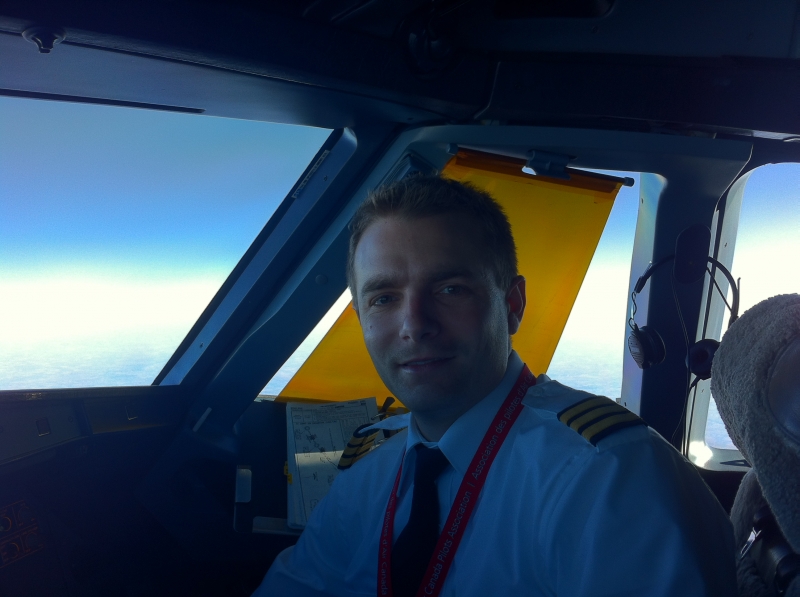
Do Langley Flying School graduates do just as well in the professional pilot workplace as college graduates? Absolutely! Checkout where our graduates are!